RS Advisor · Help Me Choose

Help me choose

Two common situations, two honest answers. Every build shows the total price, total memory, and what the electricity really costs.

Path 1 · Small startup

Small startup — run a ~100–250B model on a budget
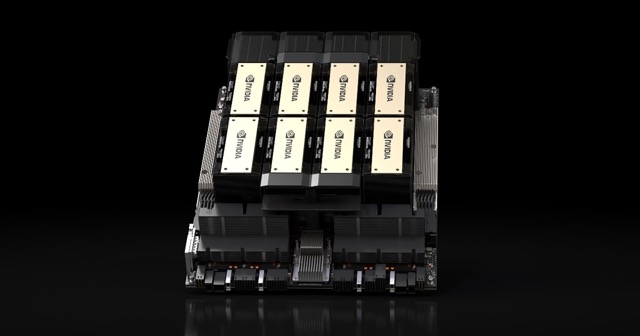
NVIDIA H200 SXM
NVIDIA H200 SXM — the hardware in this build. Image: NVIDIA
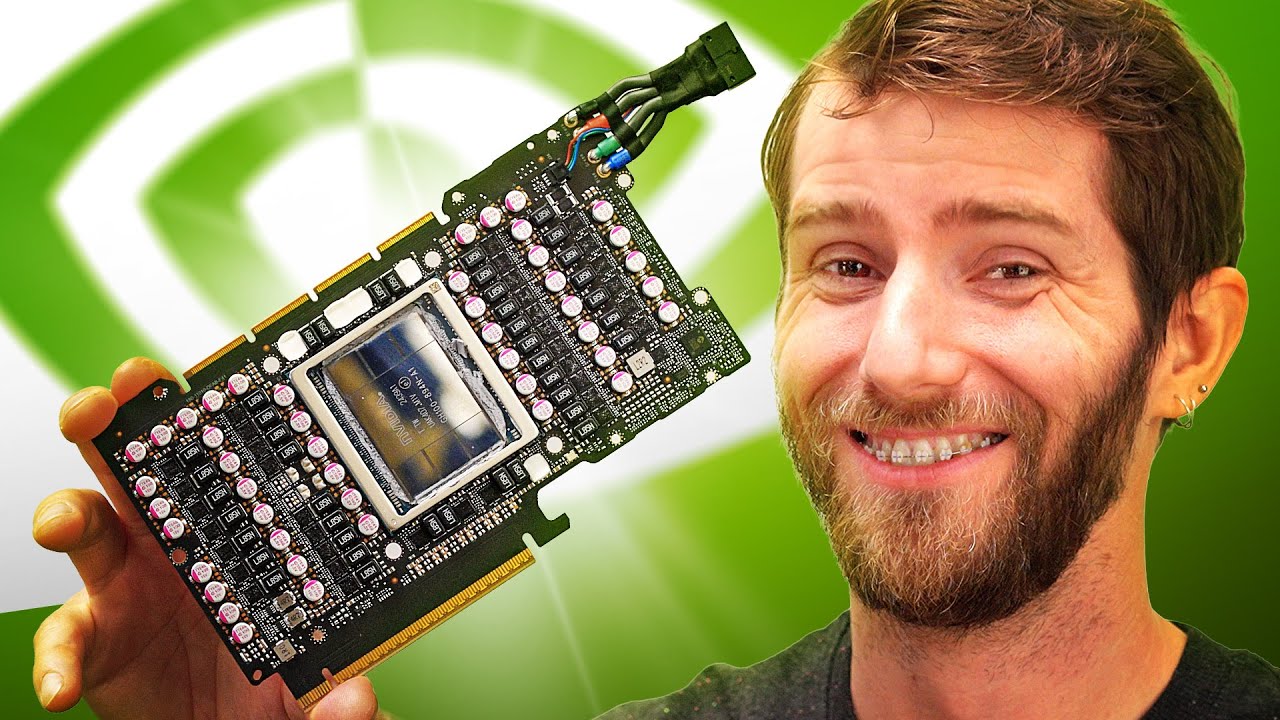
NVIDIA H200 SXM video
  1. A ~100–250B model is the sweet spot for a startup: smart enough to be useful, small enough to own the hardware.
  2. GPU memory is the workbench — the whole model must fit here or it doesn't run at all. Regular RAM cannot substitute: it sits on a link far too slow for the GPU, which would spend nearly all its time waiting instead of computing.
  3. A 235B model needs 235 GB + 20% = 282 GB. No single card holds that — but two H200s (141 GB each) pooling memory in one server do.
  4. Budget matters, and quantization is your friend: Quantization means storing the model's numbers less precisely so it fits in less memory — 8-bit halves it, 4-bit halves it again, with some quality loss. At 4-bit, the same model fits on one H200 — half the price, some quality loss.
Recommended build: 2× NVIDIA H200 SXM
  • Total GPU memory: 282 GB (combined)
  • Total price: $70,000
  • Total power: 1,400 W — about 1.17 home; one day (33.6 kWh) drains about 0.37 EV battery

Fits Qwen3-235B (needs exactly 282 GB) and anything smaller.

Honest note: for Qwen3-235B this fits with ZERO room to spare — 282 GB needed, 282 GB provided. Quantize to 8-bit for breathing room, or step up to 3× H200 (423 GB). Quantization means storing the model's numbers less precisely so it fits in less memory — 8-bit halves it, 4-bit halves it again, with some quality loss.

Request a quote for this build
Path 2 · Mid-size company

Mid-size company — serve a 400B+ model reliably to users

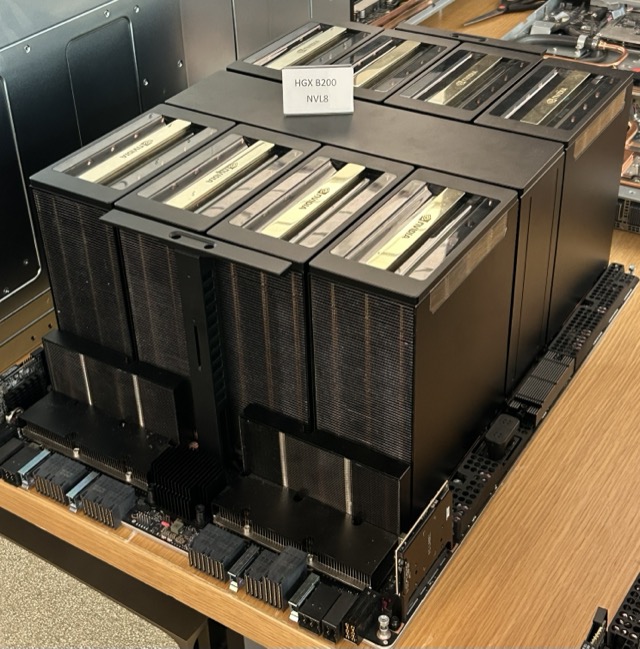
NVIDIA DGX B200
NVIDIA DGX B200 — the hardware in this build. HGX B200 8-GPU assembly — Photo: Pokiiri via Wikimedia Commons · CC BY-SA 4.0
NVIDIA DGX B200 video
  1. Serving a 400B+ model to real users means the model must fit with headroom left over — headroom is what serves many users at once.
  2. Llama 3.1 405B needs 405 GB + 20% = 486 GB; DeepSeek-R1 needs 806 GB. Piecing that together from small cards would mean slow links and pain — see the cluster explainer below.
  3. The DGX B200 is one box with 1,536 GB pooled over NVLink: every model on our Pick-a-Model page fits, with room to serve users reliably.
  4. The CPU is the traffic director — it does almost none of the AI math. Don't overspend here; the GPU does the work.
Recommended build: 1× NVIDIA DGX B200
  • Total GPU memory: 1,536 GB (combined)
  • Total price: $515,000
  • Total power: 14,300 W — about 11.9 homes; one day (343 kWh) drains about 3.81 EV batteries

Runs Llama 3.1 405B (486 GB), DeepSeek-R1 (806 GB), even Kimi K2 (1,200 GB) — with headroom left for serving many users at once.

If you outgrow one box, the next step is the GB300 NVL72 rack (~$3,000,000, 120,000 W ≈ 100 homes) — not a pile of desktop cards. See the cluster explainer below.

Request a quote for this build

A cluster is several machines wired together so they can act like one bigger machine.

The honest part: real datacenter clustering works because NVLink and InfiniBand let GPUs share memory at enormous speed. Eight desktop cards in a closet do NOT make a datacenter — the links between them are so slow that a big model split across them runs painfully slowly. Desktop cards are for models that fit on ONE card.